TRAVERSE CITY – Electric transmission facilities are currently designed to get power from power plants to local communities. But with the growth of alternative energy, those transmission systems need to expand to pass power around states, regions and the nation, officials told the Mid-American Regulatory Conference Tuesday.
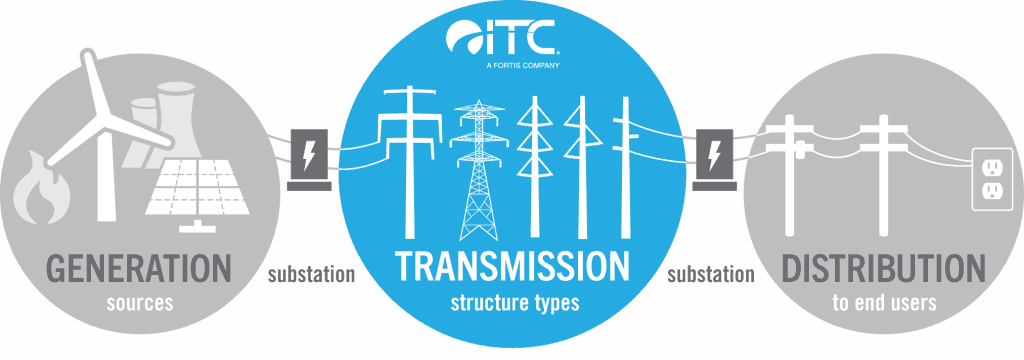
The nation’s current electric grid is still based on the same principles as original electrification: build a power plant to serve a community, said Joseph Welch, CEO of ITC, one of the two transmission companies operating in Michigan. The generating plants have been moved to regional operations but the transmission system has not followed, he said.
“As we roll into the 21st Century, I realize that model is not going to carry us very far forward,” Welch said. “We’re going to argue about it because it tugs at the fundamental principles of the business we’re in.”
Welch and others argued for a national energy policy that would guide development of power and transmission facilities.
“You can’t plan a system and have all the debates going on as to what the hell we’re planning for,” Mr. Welch said. “If we have the policy then we’ll know what the benefits are. If we can’t measure the benefits, we’re going to argue about the cost allocation and we’re not going to get it done.”
But John Bear, CEO of the Midwest Independent System Operator, which oversees transmission facilities connecting several Midwest states and the related wholesale power market, said the key is to have a plan, not necessarily the scope of that plan. He said the independent system operator could plan better if it knew that transmission systems had to be developed based on a set policy, whether that be state-by-state, regional or national.
“The further we go regionally, the more value we create,” he said. “We just need one of those models (state, federal or regional) so we can move forward.”
The plan will ultimately lead to more transmission lines across the nation, the various officials said.
“Ultimately we do need a lot more transmission. It is expensive,” said Federal Energy Regulatory Commission member Philip Moeller. “(But customers) pay more if we under-invest in transmission.”
And a regional or national energy plan is needed to guide that development, said Monty Humble, vice president of Mesa Power Group, the company run by T. Boone Pickens, who has championed a push for wind power. “Until you have national plan, you won’t be able to build that transmission,” he said. “Everybody wants it, nobody wants to pay for it, whether it’s the literal cost or the social cost of having the transmission towers in their back yard.”
Ohio Public Utilities Commissioner Valerie Lemmie argued her state already has a developed transmission system, and Mr. Welch said the regional or national system would have to be developed to include that infrastructure, not make it obsolete. He argued the broader system would make those existing lines more valuable.
And Mr. Humble said the national plan has to allow for state-level input. “Planning has to have clear national goals, but people at the local level are the ones who understand local conditions and local needs,” he said. “Without that sort of local participation, that process will fail.”
The broader transmission system will help with integrating renewable power sources into the grid. In addition to having to connect wind farms and solar arrays to their customers, a larger transmission system can also balance out the irregularities in those power sources, officials said.
“We’re blessed with a lot of renewables,” said Kent Larson, vice president of transmission for Xcel Energy. “As we start to build those out, it’s going to challenge system. One way is to spread out renewables over a bigger footprint.”
The transmission lines will also allow some additional services to connect to the system, Moeller said. “What wind is doing is creating the need for new market services: for firming the wind, for ancillary services,” he said. “The wind industry is pushing more competitive pressures into the wholesale market.”
Welch also argued that the national energy policy needs to include a renewable portfolio standard to develop that wind and other renewable power. “Each state optimizing their resources would be what happens under the model we have,” he said. “I just don’t think it’s the best model for the country.”
The national plan also has to separate the regional wholesale power markets, such as that run by MISO, from the transmission system, Mr. Welch said. “There are (regional transmission organizations) and organizations for markets. We have to separate those two functions,” he said. “We have to get the transmission planning from this market behavior. We can’t have people choosing not to participate because they don’t want to pay the membership cost.”
Moeller said, and others agreed, that transmission providers also need a federal “backstop” to ensure their facilities can be built if they cannot overcome local objections. He said a recent federal court ruling essentially prohibited FERC from condemning land on behalf of private transmission companies.
Some condemnation authority is particularly important to speed up development of the transmission systems. Welch argued it would take some years to have the full system in place, but Humble argued the 14 years it took to complete a recent transmission line in Virginia, only two of which was construction, was excessive.
Welch said there is also some reason for caution to think there will be any forced change. He said there have been prior events, like the 2003 blackout, that should have forced a move toward more regional transmission planning that so far have not.
“That was a ringing call that we were not planning the grid for regional reliability, we were planning for local reliability,” he said. “I felt we were finally going to build a transmission system. (But weeks later) the lights were on, people were back at work, life went on.”
But should it be built, the power markets nationally could change, Moeller said. “It’s really a remarkable transition that’s taken place in telecommunications industry,” he said. “This is the kind of potential we have in the electric industry. It’s going to be a little harder to get there and it’s probably going to take longer.”
This story was provided by Gongwer News Service. To subscribe, click on Gongwer.Com
a>>