LANSING – Unions, businesses and legislators from both parties, including Democratic leaders from both chambers, called on Gov. Jennifer Granholm to step back from her decision requiring new coal-fired electric power plants to show not only that they meet emissions requirements, but that the power they produce will be required.
House Speaker Andy Dillon (D-Redford Twp.) was particularly fervent in his call for the governor to retract her policy of requiring the needs assessment for each plant.
“I feel betrayed,” Dillon said to some 2,000 construction workers gathered on the Capitol lawn. “Three years ago I had a dream to have new base load built in this state. After we put up a very tough vote the bureaucrats stepped up and took it away from us.”
Said Senate Minority Leader Mike Prusi (D-Ishpeming): “We had to do a lot of things that were a little tough for a lot of us to swallow (but) there were things included in that bill that made sense for everybody. We need to get the bureaucrats moving.”
Granholm called on the Department of Environmental Quality to include in its analysis of any permit applications for coal-fired power plants, a determination whether the plants are truly needed given power demand projections and other available technology. The Public Service Commission, which is developing those analyses for the DEQ, found the Consumers Energy and Wolverine Power Cooperative plants were not needed.
Rep. Jeff Mayes (D-Bay City), chair of the House Energy and Technology Committee, called on the Department of Environmental Quality to approve the air permits for power plants for Consumers Energy and Wolverine “now.”
“Efforts by companies to get needed permits have been frustrated for two years by interest groups with tunnel vision,” Mayes said.
While Mayes agreed the state should be working to attract “green jobs,” he said it should not be looking for only those jobs given unemployment in the state. “I want any job that pays green, the type of green that allows all of you to pay your mortgage.”
House Minority Leader Kevin Elsenheimer (R-Kewadin) said his caucus had been critical of the governor’s directive because of its effects, not because of politics. “We will be the first caucus to stand up and commend the governor when she approves these permits,” he said.
Sen. Bruce Patterson (R-Canton Twp.), chair of the Senate Energy Policy and Public Utilities Committee, said the new power regulations should control the permits. “I am extremely disappointed that we are put in the position that we have to gather together to make a point,” he said.
Union and business leaders also said the administration was sidestepping the new laws by including additional requirements on the permits.
“This was a great success for our coalition,” said Doug Roberts Jr. with the Michigan Chamber of Commerce. “Unfortunately that success was short-lived.”
“Energy construction is one of the few potential growth areas in our state if only the governor and regulatory agencies would let them happen,” said Jeff Radjewski with the International Brotherhood of Electrical Workers. “Only in Michigan do state leaders look at that kind of investment and say no, thank you.”
Radjewski said his union’s members were working to get jobs installing solar and wind energy facilities, but he said those jobs would never provide full employment. “We’ll never build enough windmills to replace the man hours of a single power house,” he said.
And Beach Hall, mayor of Rogers City, which would host the Wolverine plant, said his community needs the investment. “A $1 billion project in Northeast Michigan is huge,” he said, adding the taxes from the project would offset some of the cuts to revenue sharing expected in the current year budget once it is adopted.
Speakers also sent the message that Democrats could lose some union support if they do not join the push for these plants. “I’m proud to stand with Republican leadership who’s going to put us back to work,” said Shorty Gleason with the Building and Construction Trades Council.
But environmental groups urged Granholm to hold fast to her process. “We’re looking for leadership like what Governor Granholm has shown,” said Cyndi Roper with Clean Water Action. “There’s no evidence that we can’t meet our energy needs by pursuing a strategy that excludes coal.”
Roper said there are sufficient jobs, both construction and manufacturing, in renewable energy to offset the jobs that would not be created if the power plants were not built.
“Clean Water Action views today’s rally as an attempt to cling to the past. Coal plants are dinosaurs and Michigan needs to move head with a clean energy economy,” she said. “It was extremely disappointing for us to see legislators who know the future’s in clean energy pandering to people who need work.”
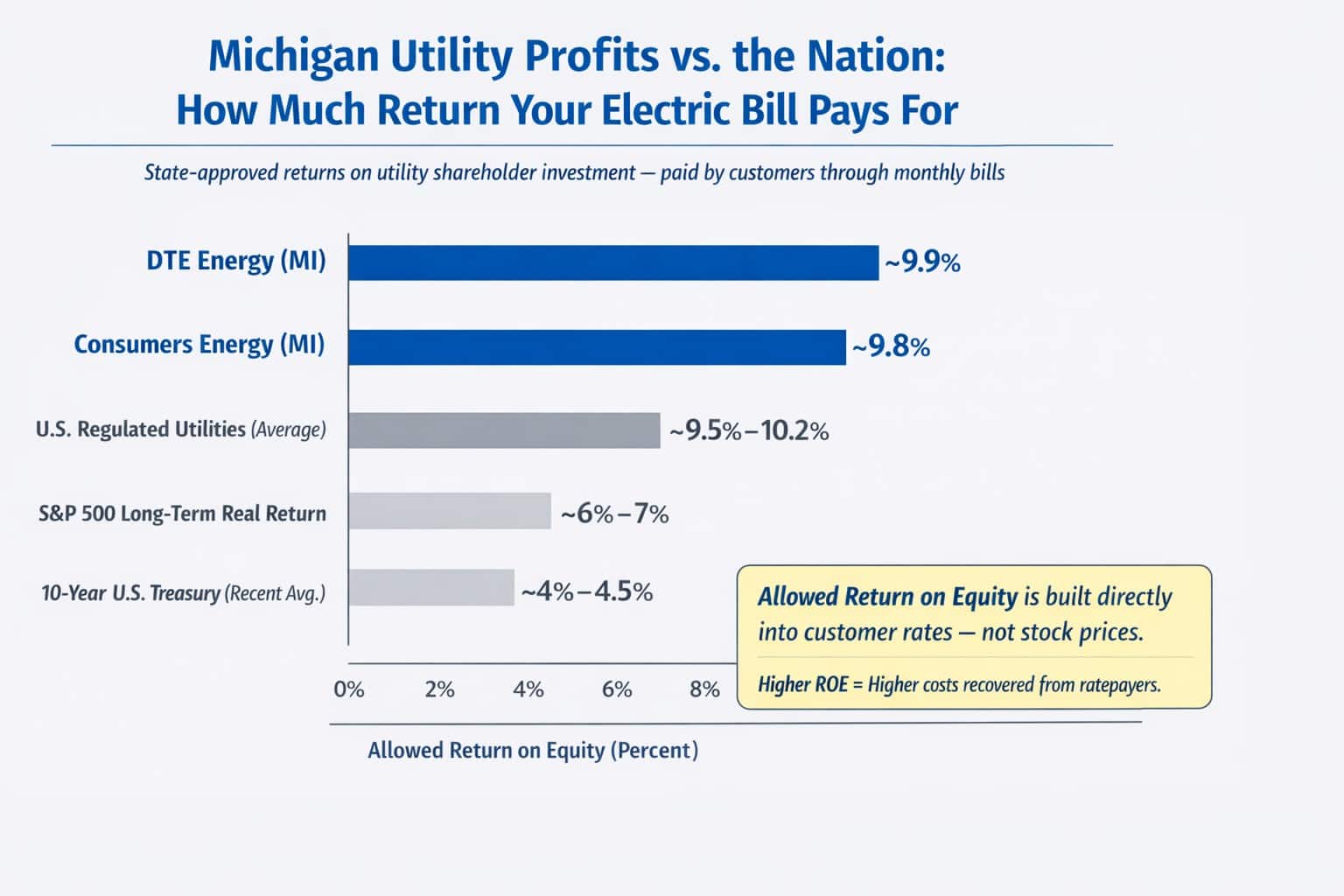
Alternative energy providers did not argue the need for the plants, but the process in place for approving them. “We don’t oppose anybody building a plant,” said David Waymire with the Customer Choice Coalition. “But we do oppose a plant being forced down ratepayers throats that is not competitively bid. The company is not at risk in this, only Michigan ratepayers are at risk.”
Waymire said the new plants would unnecessarily increase utility rates, which would further cut into any manufacturing revival in the state.
A spokesperson for Granholm did not respond to requests for comments.
This story was provided by Gongwer News Service. To subscribe, click on Gongwer.Com
a>>