LANSING – Rejecting arguments that the proposal was too expensive and that the state law directing the plan did not give enough time for customers to challenge the proposal, the Court of Appeals has upheld a renewable energy plan by Consumers Energy that would call for developing 900 megawatts of electricity produced by renewable resources.
In upholding the Public Service Commission’s decision to approve the plan, the court accepted the reasoning of the PSC that the estimated costs Consumers Energy used to construct the alternative energy generators – which would mostly be from wind energy – were likely too high compared to costs estimated by other companies, but that there would be other future opportunities to review those costs and regulate them further.
Writing the decision for the court in The Associations of Business Advocating Tariff Equity v. P.S.C. (COA docket No. 292659) was Judge Jane Markey. She was joined by Judge E. Thomas Fitzgerald and Judge Douglas Shapiro.
Consumers had to develop the plan under a controversial 2008 law that established a renewable portfolio standard for the state in terms of electric generation.
Under the act, the PSC determined that Consumers had to generate 500 megawatts of electricity through renewable sources by 2015. The plan Consumers offered said it would produce 200 megawatts by the end of 2013, 500 megawatts by the end of 2015 and 900 by the end of 2017.
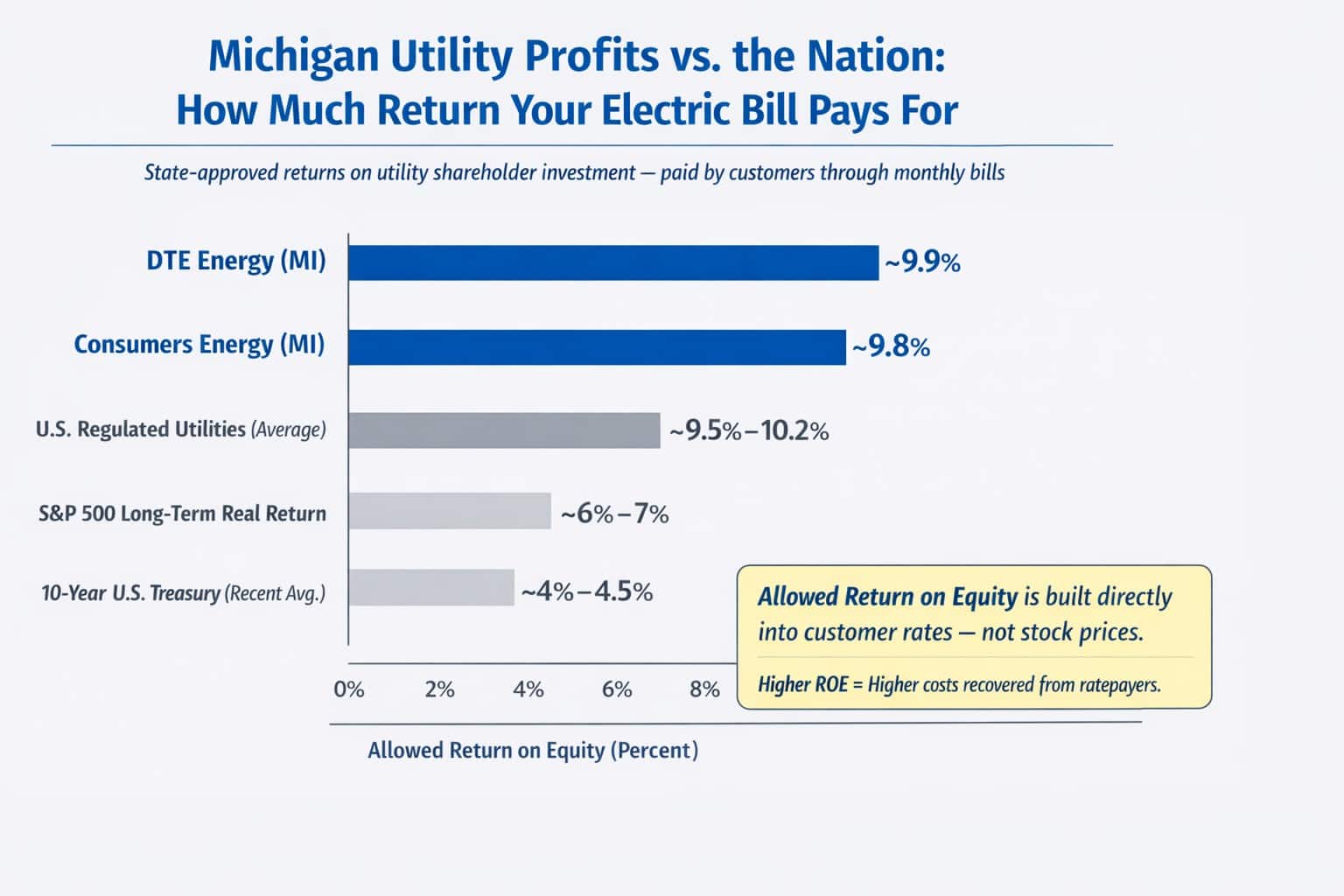
But ABATE argued that the PSC was wrong in adopting the plan in part because Consumers said generating and purchasing additional wind power would cost about $174 a megawatt, which was excessive when DTE Energy said it would cost it about $108 per megawatt.
The PSC said, and the court agreed, that the cost was high, but that under the plan the PSC would have further opportunities to review the costs as the plan is executed and adjust the approved costs if needed.
ABATE also argued that the law’s requirement that the PSC review and approve a plan 90 days after submission violated the rights of customers to review and argue against the proposed plan.
But the court, again agreeing with the PSC, said ABATE had failed to show how those rights might have been affected by the condensed review period.
This story was provided by Gongwer News Service. To subscribe, click on Gongwer.Com
a>>