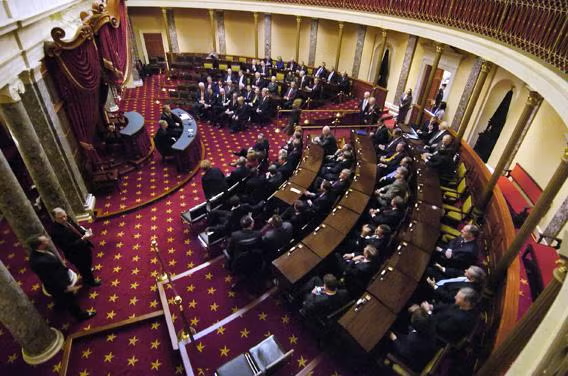
LANSING – The final budget structure for the new Department of Talent and Economic Development is not quite in place yet, but it will include few funding increase requests, Michigan Economic Development Corporation CEO Steve Arwood, director of the new department, told the House Appropriations General Government Subcommittee on Wednesday.
Arwood said the budget as currently presented has several programs in the Department of Licensing and Regulatory Affairs that are proposed to move to the new department, which formally launches March 15.
“By the end of the month we’ll have this rolled up,” he said.
The only increase Arwood mentioned for the budget was $1 million for the Pure Michigan campaign, bringing the total to $30 million.
“Costs go up in the advertising world,” he said as part of the reason for the increase.
The program is also working to expand its reach, with campaigns planned for Europe and China, he said.
The success of the brand shows in the number of organizations seeking affiliation, Arwood said.
“People want to be affiliated with that brand,” he said. “We turn more people away than we can help.”
Arwood noted the film incentive was proposed to remain at $50 million at about the same time another House committee was reporting legislation to eliminate the program.
The subcommittee also heard testimony from Tricia Kinley with the Michigan Chamber of Commerce urging that it eliminate the funding.
“It is time and overdue to end the costly and ineffective film (incentive),” she said, noting that the Film Office’s annual report showed the funds had not created any permanent jobs in the state.
Kinley said the funds would be better spent reviving the State Police trooper school or adding to the Pure Michigan campaign, echoing her statements from the Tax Policy hearing last week.
To concerns from Rep. Sam Singh (D-East Lansing) that the Michigan State Housing Development Authority was drifting from its mission, Interim Director Wayne Workman said he had canceled some of the programs Singh questioned when he took over the agency.
Of particular question was $25 million for mezzanine fund investments. Mr. Workman said he has suspended that and would leave it for another director and the MSHDA board to decide.
The EB-5 immigrant investor program that had been put in the agency was moved to the MEDC, he said.
Singh also asked whether the MEDC would be able to draw out the repayment period for the Michigan Economic Growth Authority tax credits, which have been cited as the primary reason the state faced a shortfall for the current and coming fiscal years.
Arwood said it would require legislation to change the credit payment schedules.
Rep. Laura Cox (R-Livonia), chair of the subcommittee, cut off further discussion on the MEGA credits.
“MEGA credits, while they’re a part of it, they really not a part of it,” Cox said of the proposed budget. “We’ll handle that after we address this budget.”
This story was provided by Gongwer News Service. To subscribe, click on Gongwer.Com