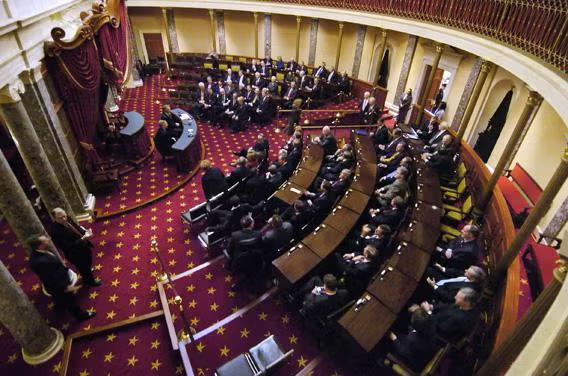
LANSING – Rep. David Knezek, Rep. Theresa Abed and Sen. Jim Ananich announced a proposal on Tuesday that would cover tuition for low-income students in universities and community colleges that would allow students benefiting from the program to pay back into the fund to keep the program going.
The group called the proposal, announced at a Capitol news conference, a “pay it forward” program. The Smarter Michigan and Retaining Talent Act would set up a pilot program with 200 students, half from universities and half from community colleges, legislators said.
The students would receive free tuition, under the conditions that they keep their grade point averages up, and would pay back a percentage of their after graduation income for a predetermined number of years. The payments would depend on whether the student went to a university or a community college, and how long they were in the program.
The students would be limited to three years in the program for those attending community colleges and five years for those attending universities. The initial pilot program would last for five years.
Payments wouldn’t be required until after the student has a job that pays above the federal poverty level.
Knezek (D-Dearborn) said in the 1970s, state funding for higher education made up 75 percent of the universities’ budgets, with tuition and fees making up 25 percent. That is now flipped, he said, and students and their families are digging “deeper into their pockets” to afford college.
“After years of funding cuts for higher education, tuition rates continue to rise, and more and more students are priced out of a college degree,” he said. “Until we are able to stem this tide and convince our colleagues that we must make funding education a priority, we need to look for innovative solutions such as the SMART Act that will expand access to students who currently cannot afford college.”
The legislation, which will officially be introduced tomorrow, calls for a $2 million appropriation for the pilot program. The program would be housed in the Department of Treasury and students would undergo means testing to qualify.
Knezek said the hope is for the program to be successful and expand statewide for all students.
Abed (D-Grand Ledge) said she is sponsoring a resolution calling for Congress to pass legislation.
“We need to widen access to a college education by making it more affordable,” she said. “An interest-free repayment system like SMART does just that. And if Michigan can get federal funding to finance the pilot program, which my resolution seeks, then it’s a win-win for our students and our state.”
The legislation does not allow the use of School Aid Fund dollars to fund the program.
Ananich (D-Flint), a former teacher, said he has heard many students’ concerns about how they will pay for college. He also said many expect the next “bubble” to be the student loan debt bubble, and it’s important to tackle the issue proactively.
“The mountain of debt facing families for higher education makes it harder for our students to compete for good jobs,” he said. “This legislation is a creative approach to helping ensure opportunities for all kids to have access to our world-class schools.”
Ari Adler, spokesperson for House Republicans, said the Democrats did not approach them about the plan at this point.
“We have no idea what the House Democrats’ plan is because they haven’t bothered to share it with us,” he said. “Working with the Republican majority on issues instead of the media would prove that were more interested in finding solutions than garnering headlines.”
This story was provided by Gongwer News Service. To subscribe, click on Gongwer.Com