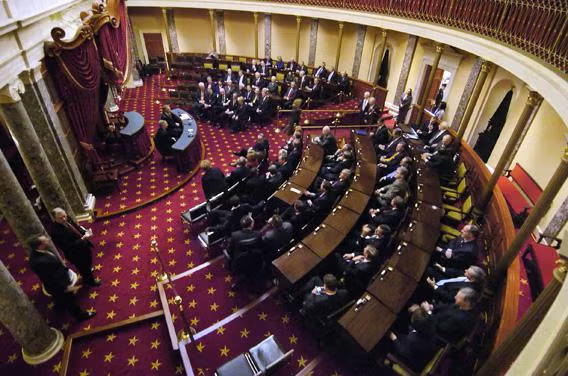
LANSING – Jobs from the film industry may be part-time, but wages generally surpass the average salary and provide benefits for many workers in the state, supporters of the $50 million film incentives told the Michigan House Tax Policy Committee on Wednesday, but opponents said the lack of permanent jobs shows the program isn’t working and should be eliminated.
The committee is considering HB 4122 , which would end the film incentive program at the end of the current fiscal year, stopping the Film Office from operating the film and digital media production assistance program and from funding various expenditures.
The committee did not vote on the bill Wednesday, but Rep. Jeff Farrington (R-Utica), chair of the committee, said the bill would see a vote next week.
Rep. Dan Lauwers (R-Brockway), the bill’s sponsor, said with the state already on the hook for hard-to-predict tax credits, it’s “common sense” to end the film incentive.
James Hohman with the Mackinac Center for Public Policy said the program has failed to provide permanent jobs, and although some people have gotten jobs through the program, its expectations have not been met.
“It drains resources that could do a lot of good if used elsewhere,” Hohman said.
The Michigan Economic Development Corporation did not have a position on the bill, but did say it supports Governor Rick Snyder’s recommendation for $50 million in the next fiscal year for the program.
Bill Black, legislative liaison for the Teamsters Local 337, said the incentives are needed because the industry is competitive and other states have tax credits.
However, Tricia Kinley with the Michigan Chamber of Commerce said other states are also questioning their incentives.
“This is an arms race Michigan will never win,” she said. “This is a transient industry with no loyalty to our states and residents.”
Melissa Patack, vice president of state government affairs for the Motion Pictures Association of America, said the jobs are like construction jobs. And she said those working the jobs get above-average pay for part time work.
Others testifying in support of the program said production crews spend money in the state, adding to its economy.
But Charles Owens with the National Federation of Independent Business-Michigan said that “helps some at the expense of many.”
Owens opposes the film incentives.
Many of those in support of the program urged the committee to give them more time, and said even just discussing ending the program makes productions resistant to come to the state.
“These incentives have been around for seven years now. … How much more time and how much more money do you need?” Rep. Lee Chatfield (R-Levering) asked. “The jig is up on tax credits. They’re not effective.”
This story was provided by Gongwer News Service. To subscribe, click on Gongwer.Com