LANSING – Michigan Public Service Commission Chair Peter Lark will spend the next eight months coordinating creation of a comprehensive energy plan for the state under an executive directive issued Thursday by Gov. Jennifer Granholm.
The new 21st Century Energy Plan will verify the power use assumptions by the PSC’s Capacity Needs Forum Report and then choose some of the options outlined in that report to fill those needs, Lark said.
“We need to plan now to meet tomorrow’s electricity needs,” Lark said. “This plan will strengthen our economic climate and grow jobs.”
“Michigan citizens and businesses need to know that there will be a reliable, affordable source of electricity when they reach for the light switch,” Granholm said. “This is an opportunity to be sure that we’re meeting those needs in the most affordable, environmentally friendly, reliable way possible.”
Among the requirements of the directive (No. 2006-2) is that the plan provide for energy needs through efficiency and renewable and alternative sources as well as potentially through new generating plants. The directive also calls for the plan to take into account environmental effects of any proposal.
“The timing couldn’t be better from an environmental and economic perspective,” said Environmental Quality Director Steve Chester. “Greater diversity in our energy portfolio means less dependence on fossil fuels.”
Chester said other states have developed plans to attract alternative energy companies. “We need to find ways to encourage these companies, to provide incentives for these companies,” he said.
Lark said he intends to develop the plan by creating four workgroups to look at different aspects of the power market. The groups would include representatives of residential customers, utilities, business, and other interest groups as well as legislators.
“I am most of all excited about working with the state’s finest minds,” he said.
He said some parts of the plan would likely require only approval of the PSC to implement, but he expected much of the plan would require legislation.
Some of the legislative aspects could see a head start with the plan expected in the coming weeks to the Senate Technology and Energy Committee. Sen. Bruce Paterson (R-Canton) began a workgroup on the issue about a month ago and is expecting its proposal shortly.
But a spokesperson for Patterson said the senator is willing to pass the issue to the administration as long as it moves forward. “Sen. Patterson is thrilled that the governor is at last getting on with it,” said spokesperson Chris Kelly. “It doesn’t matter who is taking credit for it as long as it gets done for Michigan. It’s got to be a corporate effort and let’s get on with it.”
Barry Cargill with the Small Business Association of Michigan said he also looks forward to participating in developing the plan, either through the work groups or through public comment. “We’re encouraged that the governor sees the need for a comprehensive energy plan,” he said. “We think it’s important that the PSC and the governor take this issue to the citizens.”
Public Interest Research Group in Michigan pushed the renewable energy provisions in the directive.
“A strong Renewable Portfolio Standard (RPS) is the single biggest step that Michigan can take the level the playing field and drive new economic development based on renewable energy for electricity,” said Mike Shriberg, director of the environmental group. “Perhaps most importantly, committing to renewable energy means more jobs for Michiganders. According to the Renewable Energy Policy Project, Michigan has the potential for over 10,000 new jobs from wind turbine production (which ranks 6th nationally).”
And the state’s two largest utilities hope the plan will provide the environment to allow construction of the new base-load power generation that the Capacity Needs Forum predicted would be needed as early as 2009.
“Throughout the Capacity Needs Forum there was a conclusion that Michigan’s long-term energy needs will require addition generating capacity,” said Len Singer with Detroit Edison.
“As the Capacity Needs Forum report indicated, there are some issues that need to be addressed to facilitate that plant,” said Dan Bishop with Consumers Energy.
But both utility officials said current law, which allows some customers to seek electricity from competitors to the utilities, eliminates the load certainty that provided the basis for financing past plants.
“There isn’t enough assurance as to how that investment can be recouped,” Singer said. And he said that problem of investment recovery held for competitors as well as the utilities.
Lark said part of the plan would be determining what regulatory changes would be needed to encourage construction of new power plants in the state. While there have been new plants built in the last decade, he said most of those were natural gas-burning plants that are now more expensive to operate than when they were built and that were designed to supplement base load plants, not to serve as them.
And while he admitted the goal of current law was to allow market forces to drive placement and construction of new plants, he argued that plan in the end may not serve the state very well. “We don’t want Michigan to be at the peril of varying electric rates through the (Midwest Independent System Operator),” he said.
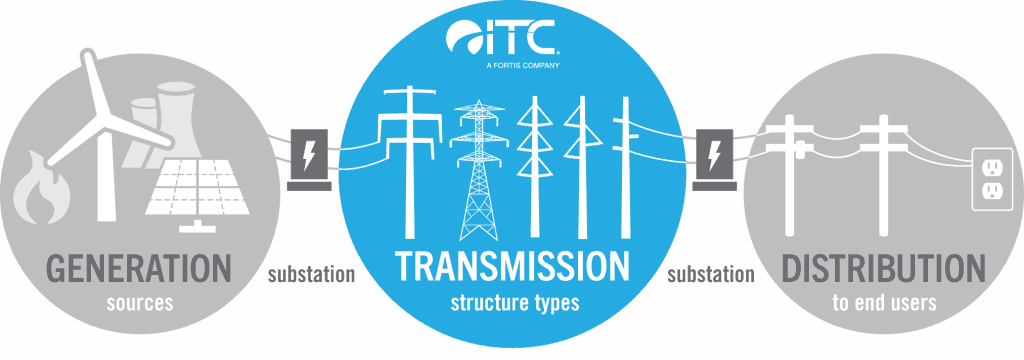
The MISO oversees transmission of power through much of the Midwest as well as wholesale rates for that power.
The Capacity Needs Forum did make recommendations on helping utilities finance new base load generation, but Mr. Lark said many of those recommendations, as were others in the report, were not sufficiently fleshed out to be implemented.
This story was provided by Gongwer News Service. To subscribe, click on Gongwer.Com