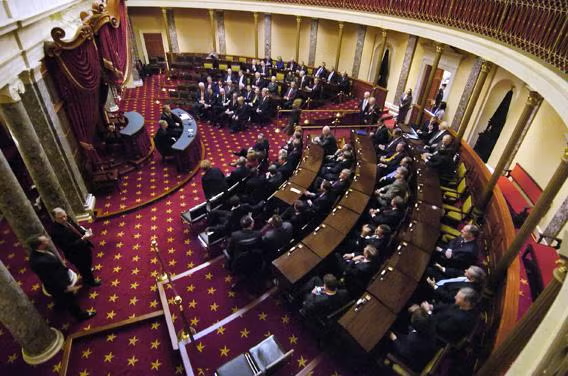
LANSING – Legislation curbing the personal liability of business executives if their firm fails to pay taxes has been signed by Governor Rick Snyder.
Snyder’s signature of SB 337 (PA 3, immediate effect), comes after he vetoed a previous bill, SB 64 , over implementation concerns for the Department of Treasury. The new law pares back previous law that said the officers of a business may be personally liable for any unpaid taxes to instead say only “responsible persons” could be liable.
Under the law, a responsible person is the officer who at the “time period of default” controlled or supervised the collection, accounting or filing of tax returns and who willfully failed to pay the collected taxes that were due, according to a House analysis of the bill.
The new law also tightens up language on whether a person’s signature can represent prima facie evidence showing he or she was the responsible person. This language is designed to shield successor officers from assumed liability if they are merely signing documents representing decisions made by their predecessors.
And the law limits the responsible person’s liability to no more than four years after the date of the assessment.
“I thank Sen. Brandenburg, members of the Legislature and the business community for working together to pass a bill that provides a better solution for updating Michigan’s corporate officer liability law,” Snyder said in a statement thanking the bill sponsor, Sen. Jack Brandenburg (R-Harrison Township). “I am confident the changes in this bill will bring more fairness to the process and help establish a more positive business tax environment, which will help our economy grow and thrive.”
Tricia Kinley, senior director of tax and regulatory reform for the Michigan Chamber of Commerce, also praised the bill.
“Senate Bill 337 is a comprehensive bill that puts in place concrete deadlines for the Michigan Department of Treasury to finish audits and respond to refund claims,” she said in a statement. “In addition, the new law will dramatically improve Michigan’s officer tax liability statute, long viewed as extreme among states, by giving those who have been unfairly assessed a fair opportunity to absolve themselves.”
This story was provided by Gongwer News Service. To subscribe, click on Gongwer.Com