TRAVERSE CITY – With coming changes in energy sources and costs, utilities and regulators are going to have to work together to ensure the new technology is implemented and customers are not buried by the costs, regulators and utility officials told the Mid-American Regulatory Conference on Monday.
The cost of generating power is increasing as fuel costs again begin to rise and utilities are having to invest both in some refreshes of their current technology as well as bringing in some new technology, officials said. Those changes and the development of new technology are going to require some tough decisions both on increasing rates and on implementing projects that could ultimately fail.
“Customers in the future are going to see rising rates. I don’t see any way we can avoid that,” said Benjamin Fowke, executive vice president of Excel Energy. “So we need to help them manage their bill.”
DTE Energy CEO Tony Earley said Michigan is not unusual in having much of its generating infrastructure due for replacement. Estimates currently show utilities across the country will have to spend as much as $2 trillion by 2030 replacing worn out infrastructure.
And he said it would be unreasonable to think all of that infrastructure could be replaced with renewable power. “Windmills and solar panels are never going to power a big auto assembly plant or a cold rolled steel mill,” he said. “You need a big coal or nuclear baseload plant.”
Federal Energy Regulatory Commissioner Mark Spitzer said handling those cost increases and coming technology needs is going to require members of the regulatory bodies working amongst themselves as well as with the utilities and customers.
“We’re going to need that sense of collegiality, we’re going to need that sense of good will and communication, not only in Washington but across the nation,” Spitzer said. “This type of meeting is how we’ll solve our energy problems.”
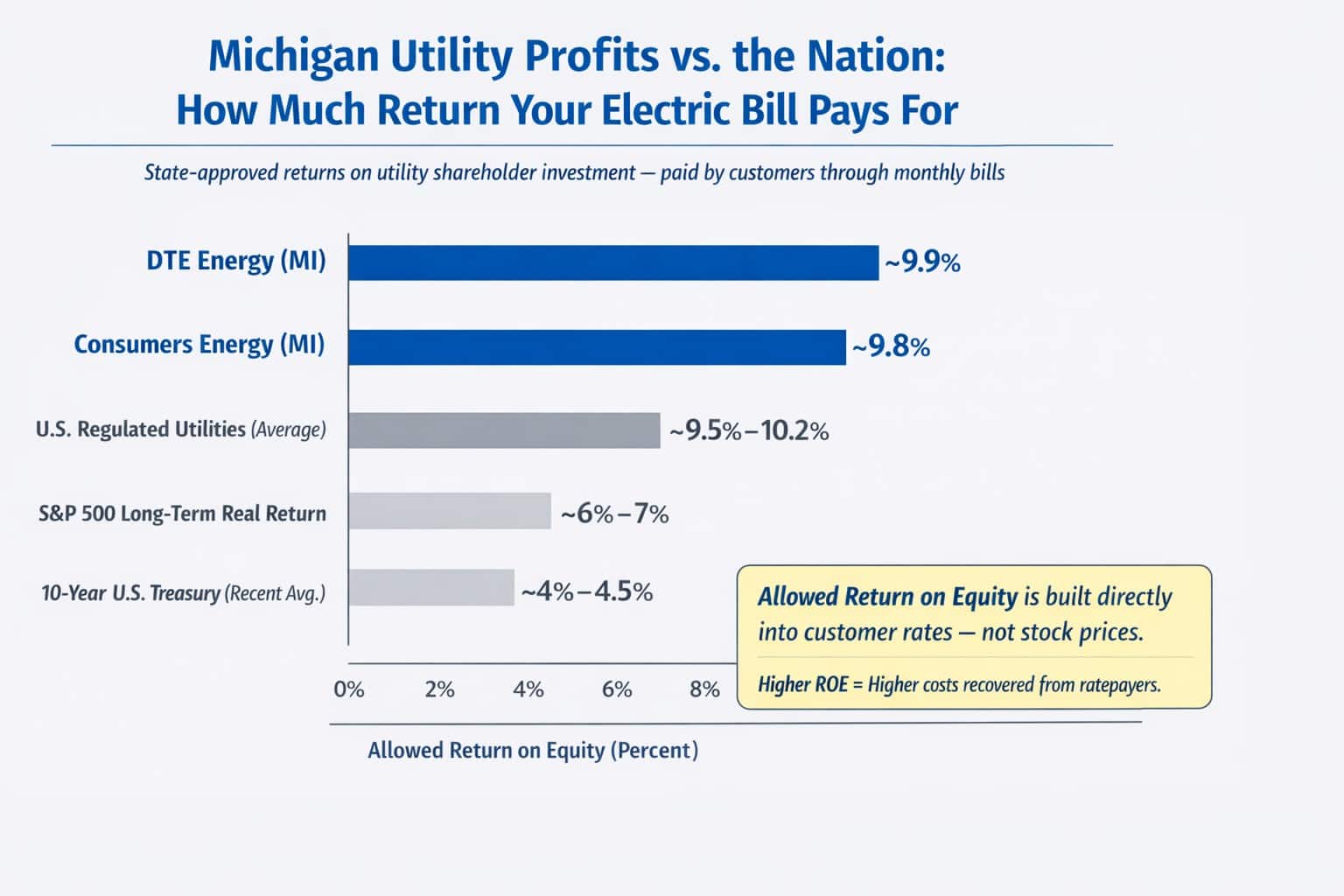
He said in some states the desire to keep customer costs down has hampered the ability to set reasonable returns for utilities.
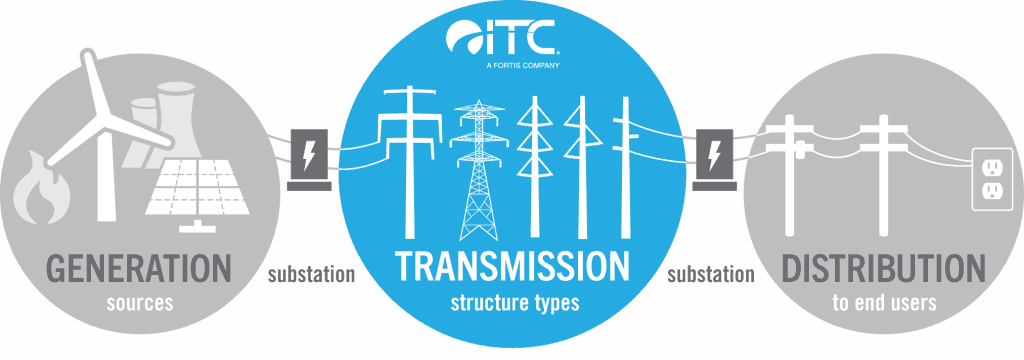
Regulators are also going to have to work with utilities to help them with placement of new infrastructure from transmission lines to wind turbines.
“NIMBY (not in my backyard) has gotten particular difficult, especially as the Internet has enhanced ability to communicate with elected officials,” he said. “What I’ve seen in filings made with FERC is almost thoughtless, mindless opposition (to new facilities).”
Fowke said the cooperation between regulators and utilities will be particularly important because utilities are going to have to be able to take some more risks to bring in new technology. “The technology we’re going to invest in is going to move us away from our sweet spot,” he said, noting Xcel in the past has stuck with already-tested technology. “We’re going to have to help (regulators) understand that these projects are going to have some successes and failures. We’re all going to have to work together.”
But he said the technology will have to include smart grid systems that will allow customers to watch, and control, their own power use.
Xcel is implementing a smart grid pilot project in Boulder, Colorado, to determine the interest in customer-based power management, but he admitted the project might not be a true test of interest in the system because of the larger environmental awareness in that community.
Spitzer said there would be interest in the systems, at least if his teenage son is an indication of the interest of the coming generations.
“We’re told customers are not interested, they don’t care where power comes from, they just want lights to go on,” Spitzer said. “I reject these comments. I think the attitudes can change.”
But regulators have to be sure they address only the costs and need for technology, not side with any particular solution. “Government should not act in a way that hampers any of these new technologies or mark any as nonstarters,” he said.
And where the state regulators need to give utilities some flexibility to try different solutions, he said the FERC also needs to allow state commissions room to come up with their own solutions to the various issues.
CARBON CAPTURE: Among the coming technologies is one that could help to control carbon emissions, capturing and storing it is possible and safe. The issue now is to make it cost-effective, speakers said.
While there is still much geologists do not know about land formations, there are safe layers for storing carbon dioxide, said Malcolm Wilson, director of energy and environment at the University of Regina in Saskatchewan, Canada.
The weakest link in the sequestration system is the injection well, Wilson said. “The oil industry’s had 100 years of understanding those wells and mitigating the problems,” he said.
But he also said that a leak in a full, sealed carbon injection site would not create unsafe carbon dioxide levels in a home built directly over the wellhead.
And he said there are now international efforts to set standards on the systems.
Sean Black, product manager at Alstom, a power plant development company, said there are also several methods of collecting the carbon dioxide and will be more over the next 15 years. “The challenge will be which is the most cost effective,” he said.
This story was provided by Gongwer News Service. To subscribe, click on Gongwer.Com
a>>